
The tangled ratio of thinner at the construction site directly affects the paint film effect. After reading this article, you no longer need to add based on your feelings.
"Master, is this paint too thick? Add some thinner.""How much is appropriate?""Well...just go by my feeling, maybe adding 10% should be about the same."
Conversations like this are not uncommon on construction sites. The use of thinner seems simple, but it directly affects the final effect of the paint film, the amount of paint used, and even the service life of the coating.
As a manufacturer with many years of experience in paint production and construction, today I will talk to you about the correct way to use thinner. The role of thinner is like a "conditioner". It adjusts the viscosity of the paint to make the application smoother and the paint film more even and smooth.
01 Thinner: a good partner for paintWhat exactly is thinner used for? Simply put, it's like adding some water to thick porridge to make it easier to spread. There are three specific functions:
The first is to reduce the viscosity of the paint, making it easier to brush, spray or roll; the second is to improve the convenience of construction, the adjusted paint has better fluidity and more even coverage; the third is to control the drying time, different diluents will affect the drying speed of the paint.
But please note that more diluent is not always better. Wrong type or excessive addition will cause the paint performance to decrease, or even completely lose the original protective or decorative function. This is why we often say: "Using the right diluent can help, but using the wrong diluent can destroy it."
02 Different construction methods have different dilution ratios.The proportion of thinner added is not static, but needs to be adjusted according to the specific construction method. Often paint manufacturers will give a general ratio, but this is only a starting point.
For airless spraying, due to the high spraying pressure, the amount of diluent added is the minimum, generally within 5%; for air spraying, the amount of diluent needs to be increased to about 10-15%; if brush or roller coating is used, the amount of diluent is about 5-10%.
What needs special explanation is the mist spray process. This construction method is mainly used for the sealing layer between the primer and topcoat, and the amount of diluent will increase significantly, usually reaching 30-40%. This is because mist spraying requires the paint to be very thin to create an extremely thin connecting layer.
These ratios are mass ratios rather than volume ratios. That is, if you have 100 kilograms of paint, you should not add more than 5 kilograms of thinner when airless spraying. Accurate measurements must be taken before construction, and estimates cannot be made based on feelings.
03 Seven factors affecting the amount of diluentWhy does the same paint require different thinner ratios at different construction sites? This is mainly affected by the following factors:
The construction environment temperature is the most intuitive factor. When the temperature is high, the fluidity of the paint itself will be better, and less diluent can be added; when the temperature is low, the amount of diluent needs to be increased appropriately.
The type of paint itself is also important. The diluents for oil-based paint and water-based paint are completely different, and the adding ratios are also very different. Even for the same type of paint, different manufacturers have different product formulas and require different dilution ratios.
The habits and experience of the construction worker will also affect the use of thinner. An experienced master will fine-tune the proportion of thinner based on the condition of the paint, the temperature and humidity of the day, and the conditions of the construction surface.
The situation of coating equipment cannot be ignored either. Different spray guns and nozzle sizes require different paint viscosities, and the corresponding thinner ratio naturally needs to be adjusted.
The quality of the paint is also a key factor. A high-quality paint has good fluidity and may require less diluent to reach application viscosity; while a paint of average quality may require more diluent to adjust.
The specific painting purpose will also affect the use of thinner. If it is just a general decorative painting, the diluent ratio can be conventional; if it is a painting that requires special effects or special properties, a special diluent or ratio may be required.
Manufacturer's recommendations are the starting point for all construction. Regular manufacturers' product descriptions will provide recommended types and ratio ranges of diluents. This is data obtained through rigorous testing. Be sure to read it carefully before construction.04 How to judge whether the amount of diluent is appropriate?
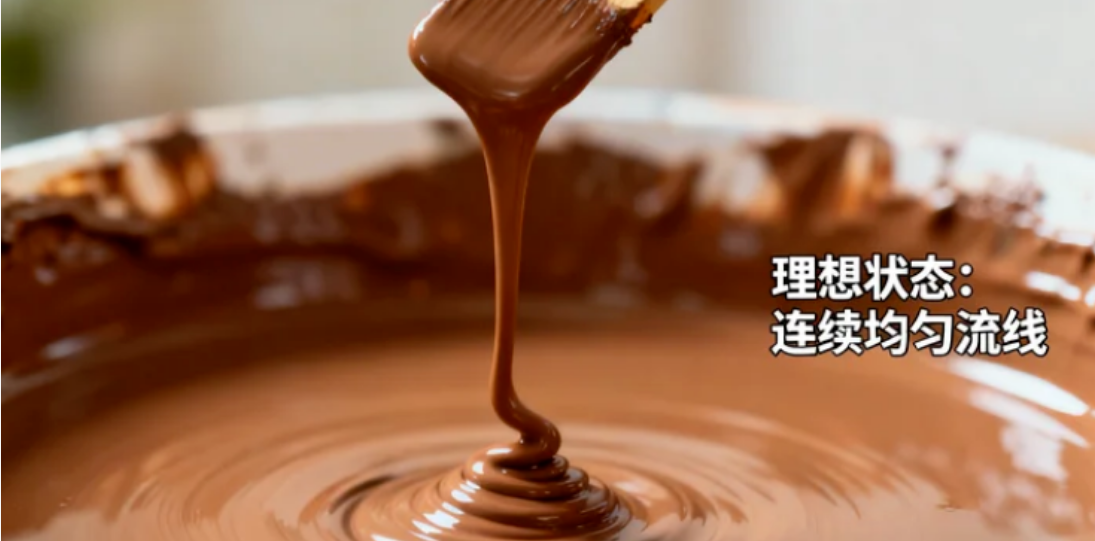
Since so many factors will affect the amount of diluent used, how to judge whether the ratio is appropriate during construction? Here are a few practical criteria:
Observe the fluidity of the paint. After stirring evenly, lift the stirring rod and the paint should flow down in a continuous, even line, rather than dripping or falling in clumps. The lines that flow down should remain unbroken for a certain period of time.
Pay attention to the status during construction. When spraying, there should be no "dry spray" phenomenon (the paint dries into powder before it reaches the surface); when brushing, the paint should flow naturally without leaving obvious brush marks.
Check the paint film effect. The dried paint film should be even and smooth, without defects such as sagging, orange peel, and shrinkage holes. This is the ultimate criterion for determining whether the amount of diluent is appropriate.
The simplest principle is: as long as there are no problems such as paint delamination, paint film sagging, dry spraying, etc. during the construction process, the addition ratio of the diluent can be considered appropriate.
Of course, the most scientific approach is to use a viscometer. Adjust the paint to the manufacturer's recommended application viscosity and record the amount of thinner required to achieve this viscosity. Although this is a little troublesome in the early stage, it can ensure the consistency of each construction.
05 Common misunderstandings about the use of diluentIn many years of construction guidance, we have discovered that there are several common misunderstandings that require special reminder:
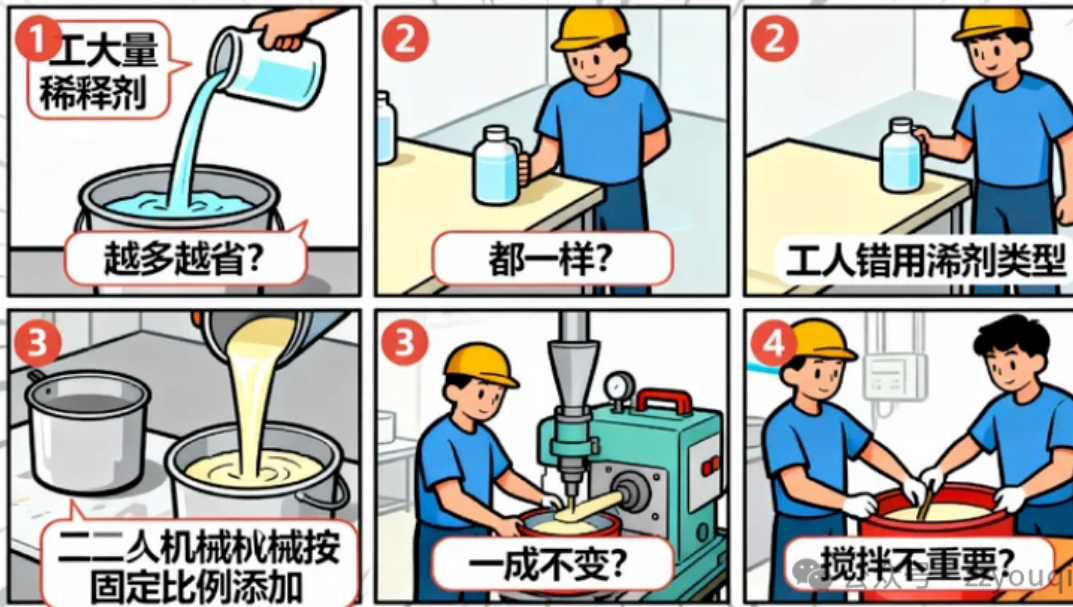
Myth 1: The more thinner you use, the less paint you use. In fact, excessive thinner will cause the paint film to become thinner, requiring several more coats to reach the required thickness, which may increase the amount of paint used.
Myth 2: All thinners are the same. Different types of paint require matching thinners. Using the wrong thinner may cause the paint to dry, wrinkle, lose luster and other problems.

Misunderstanding 3: The dilution ratio remains unchanged. As mentioned earlier, factors such as construction environment, paint batch, and coating equipment will all affect the actual required dilution ratio and should be adjusted flexibly.
Misunderstanding 4: Only focus on the addition ratio and not on even mixing. The thinner must be fully mixed with the paint, otherwise there will be local problems of being too thin or too thick, affecting the quality of the paint film.
The correct use of thinner will not only make the construction smoother, but also ensure the quality of the paint film and extend the service life of the coating. It seems to be a small link in the construction, but in fact it is related to the success or failure of the entire painting project.
The correct use of thinner is an important step in paint construction and needs to be flexibly adjusted according to specific conditions. Remember the core principle: The essence of thinner is to adjust the viscosity of the paint, not simply "add water" to the paint.
As a paint manufacturer with many years of experience, we hope these practical suggestions will help you perform better. If you encounter specific problems during construction or need professional technical guidance, we are always available to support you.
The right coating combined with the correct construction method can achieve the best results. This is not only a summary of our experience, but also a sincere suggestion to every construction worker.

عنوان الشركة:
منطقة GU Ojiatun الصناعية، مدينة المحور G، مدينة zh U، Wei Fang، مقاطعة S Shak، الصين.
التعاون في السوق:
المدير شوان:+86 18563627592


حقوق الطبع والنشر © 2025 Weifang Xingyuan Paint Industry Co., Ltd
خريطة الموقعيستخدم هذا الموقع ملفات تعريف الارتباط لضمان حصولك على أفضل تجربة على موقعنا.

 English
 Español
 Pусский



 واتس اب
 هاتف
هاتف صندوق البريد
تعليق
(0)